
Distracted driving and speeding continue to be among the most significant threats facing roadway workers across the United States. Whether crews are performing routine maintenance, responding to emergencies, or supporting infrastructure improvements, a single moment of driver inattention can have life-altering consequences.
At Flagger Force, we are Safety-Driven® and committed to ensuring our crew members, clients, motorists, and community members return home safely at the end of every day. Through our People Aren’t ConesSM campaign and ongoing partnerships with organizations that share our safety-focused mindset, we raise awareness of work zone risks and promote safer driving behaviors.
People Aren’t ConesSM reminds us that behind every work zone are parents, sons and daughters, spouses, neighbors, and friends who can’t be replaced. That’s why every safety decision begins with the human factor. As the traffic control industry evolves and conversations around work zone safety innovations continue, it’s important to consider worker visibility and explore new approaches to protect roadway crews.
Mike Doner, President and CEO of Flagger Force, shared, “At Flagger Force, we believe visibility saves lives. More than 15 years ago, we made the deliberate decision to invest in full-body, high-visibility yellow personal protective equipment to ensure our field employees stand out and are recognized as real people. We’re dedicated to proactively raising awareness of work zone safety and partnering with other organizations across the industry to support strategic advancements that help drivers recognize the human silhouette, see the people behind the hard hats and safety vests, and respond to roadway workers faster. The focus must remain on what truly matters: protecting the people working on and near our nation’s roadways. We will continue exploring solutions that complement frontline workers and ensure they return home safely at the end of every day.”
To learn more about approaches to work zone safety, we recently connected with representatives from the Indiana Department of Transportation (INDOT), an organization that takes a proactive approach to enhance work zone safety and combat dangerous actions behind the wheel. During our conversation, we discussed two programs: Project Greenlight, a visibility initiative designed to make workers more noticeable in active work zones, and Safe Zones, a speed-control program focused on reducing unsafe driving behaviors.
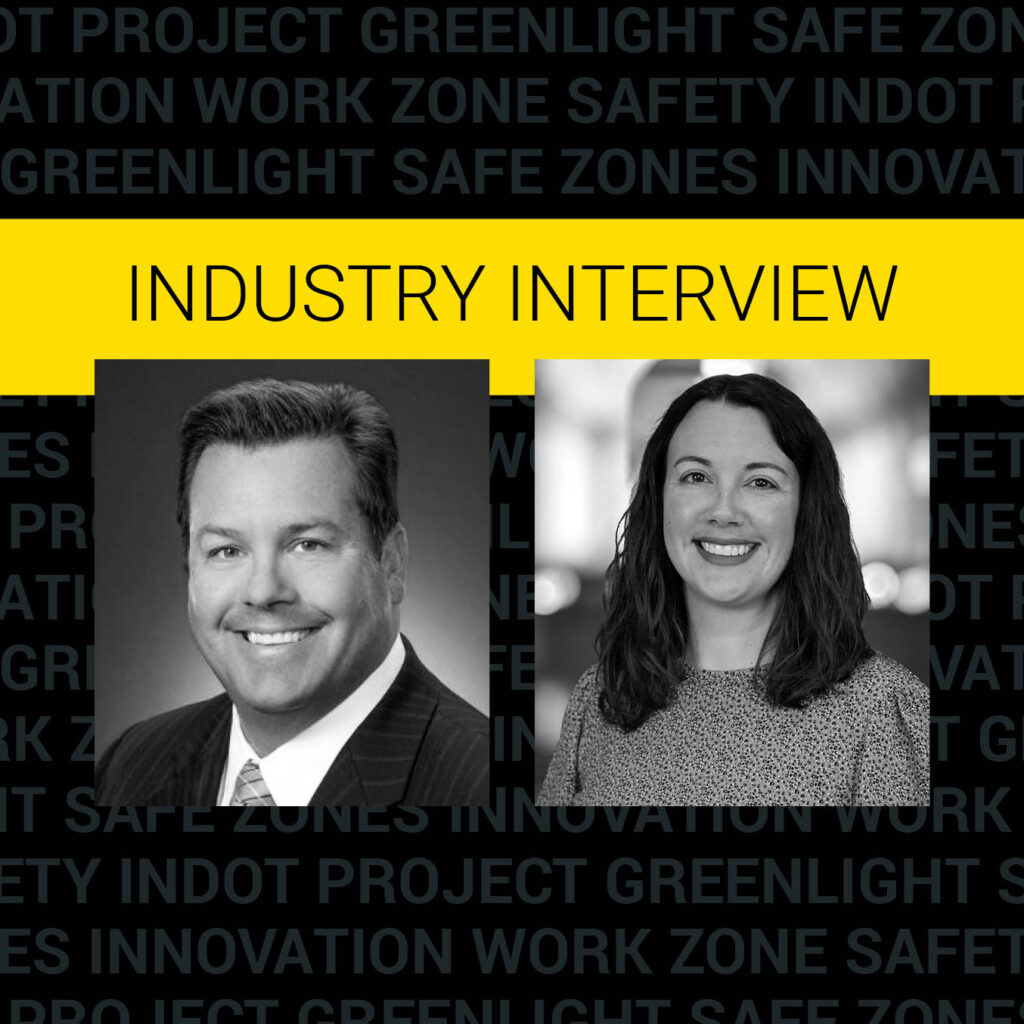
We were honored to speak with Todd May, Managing Director of Innovation, Research, and Emerging Mobility, and Natalie Garrett, Strategic Communications Director for INDOT. Together, they shared insights into the challenges facing roadway workers today, the development of these safety programs, and opportunities to further strengthen work zone safety in the years ahead.
Read what Todd and Natalie shared during our recent conversation.
Can you share your role at INDOT and your day-to-day responsibilities?
Todd: I serve as INDOT’s Managing Director of Innovation, Research, and Emerging Mobility. My team focuses on identifying new ideas and technologies that can improve safety, efficiency, and performance across the agency. A significant part of our work involves supporting people in the field by evaluating opportunities for innovation and researching solutions to make their jobs safer and more effective.
Natalie: As Strategic Communications Director, I help communicate INDOT’s programs, initiatives, and priorities to the public. That includes supporting transportation safety outreach, educating motorists about key issues impacting our roadways, and helping share information about programs designed to protect both workers and community members.
From INDOT’s perspective, what are the most common or most concerning driver behaviors you see in work zones today?
Todd: Distracted driving is the number one concern we hear about from our workers. Whether it’s cell phone use or other distractions, drivers are often focused on things other than the roadway. Our crews regularly encounter motorists who are not paying attention to their surroundings, posing significant risks to anyone working near traffic.
These concerns played a major role in the development of Project Greenlight. We wanted to identify ways to make workers more visible and help capture drivers’ attention before an incident occurs.
Natalie: Speeding is another major concern. Higher speeds increase both the likelihood and severity of crashes, which becomes especially problematic in work zones where motorists and roadway workers operate in close proximity.
When distracted driving and speeding occur together, the risks increase dramatically. That’s why INDOT continues to focus on both driver awareness and speed reduction initiatives as part of its broader work zone safety efforts.

Could you give a brief overview of Project Greenlight?
Todd: Project Greenlight is a voluntary safety initiative that equips roadway workers with wearable green strobe lights designed to increase visibility in active work zones. The concept originated in conversations with field personnel seeking additional ways to stand out in environments where workers are often surrounded by equipment, traffic control devices, and moving vehicles.
The goal is simple: help drivers recognize a person in the work zone as early as possible. The lights are worn on the back of hard hats, shirt collars, or belt loops. As workers are walking with traffic, they can’t see what’s coming, so the lights help them stand out. The lights are visible from a significant distance and can help draw attention to workers who may otherwise blend into the background of a busy work environment.
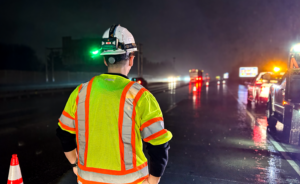
Before launching the program, INDOT worked with Purdue University researchers to evaluate color options, visibility, and overall effectiveness. Green emerged as the strongest choice because it is highly visible to the human eye and is not commonly associated with other work zone devices. The strobing pattern also helps differentiate the lights from traffic signals and other roadway lighting.
Could you give a brief overview of Safe Zones?
Natalie: Safe Zones is Indiana’s worksite speed control pilot program designed to reduce excessive speeding in active construction zones. The program was established through state legislation and uses radar technology to identify vehicles traveling more than 11 mph above the posted work zone speed limit. Drivers receive a warning for their first violation. Subsequent violations can result in civil penalties, beginning at $75 and increasing to $150 for repeat offenses.
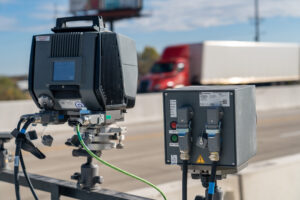
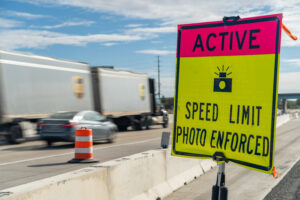
Currently, INDOT has four active Safe Zones locations across the state. Since implementation, we’ve seen meaningful reductions in excessive speeding, with overall decreases ranging from approximately 30% to 40%. At some locations, the reductions have been even more significant.
The ultimate goal isn’t issuing citations. Fines collected through the program are deposited into the state’s general fund, while the focus remains on creating a safer environment for both workers and motorists by encouraging drivers to slow down and pay attention while traveling through active work zones.

What has surprised INDOT most about Project Greenlight and the Safe Zones Program?
Todd: For Project Greenlight, the biggest surprise has been the level of employee adoption. We initially focused on roadway workers, but interest quickly spread throughout the organization. People saw the value of increased visibility and wanted to incorporate the lights into their own operations. That kind of grassroots support reinforced that visibility remains a universal safety concern.
Natalie: We’ve seen a similar response with Safe Zones. While some drivers are initially skeptical of automated enforcement, we’ve also received positive feedback from contractors, workers, and family members who appreciate the focus on safety.
Several testimonials featured on the Safe Zones website describe calmer driving conditions, increased awareness among motorists, and greater peace of mind for workers and their families. While the program’s success can be measured by speed-reduction data, personal experiences offer another important perspective on its impact.
Where do you see the biggest opportunity for improvement in work zone safety over the next five years?
Todd: We’re already exploring innovations related to work zone intrusion detection, connected vehicle systems, and other technologies that can provide earlier warnings to workers when potential hazards are approaching.
Natalie: Education and awareness will remain critical. Lasting improvements require ongoing engagement from transportation agencies, contractors, traffic control providers, and motorists. I urge all motorists to remember that every work zone is filled with real people performing essential work. Slow down, stay alert, and eliminate distractions behind the wheel to create safer conditions for everyone traveling through and working within a work zone.
Work zone safety is a shared responsibility. The more we collaborate across the industry and reinforce consistent safety messages, the greater impact we can have. Flagger Force would like to thank Todd May and Natalie Garrett for sharing their insights and for their continued commitment to advancing work zone safety. Their work through Project Greenlight and Safe Zones demonstrates how innovation, education, and collaboration can help address some of the most persistent challenges facing roadway workers today.